💡 Pro Tip: Ignore the object itself. From 90° above, the Eiffel Tower is just a brown square with a dot in the middle. But its shadow is a perfect, unmistakable tower shape lying on the ground.
1. The Sundial Effect
Tall, thin structures are almost invisible from space unless you look for their dark twin on the ground.
The building is a silver dot. The shadow is a mile-long dark needle stretching across Dubai streets.
It's just a white pixel. But the shadow shows the pointy tip clearly.
2. Perfect Symmetry
Historic human landmarks are often defined by rigid mathematical perfection, which stands out against organic nature.
Look for "The Trident" shape of paths leading to a center point. Gardens form perfect geometric patterns.
A central square building surrounded by a perfect square moat or wall. Absolute symmetry on all four sides.
3. Detective Strategy: Context Clues
What is right next to the landmark?
-
🌊
Waterfront Icons: Statue of Liberty (island), Sydney Opera House (jutting into harbor). The water border defines the shape.
-
⛯
The Roundabout Rule: Many European landmarks (Arc de Triomphe) sit in the center of a massive roundabout with roads radiating out like a star.
4. Ancient vs Modern Landmark Differences
Architectural materials and construction patterns help date landmarks from satellite view.
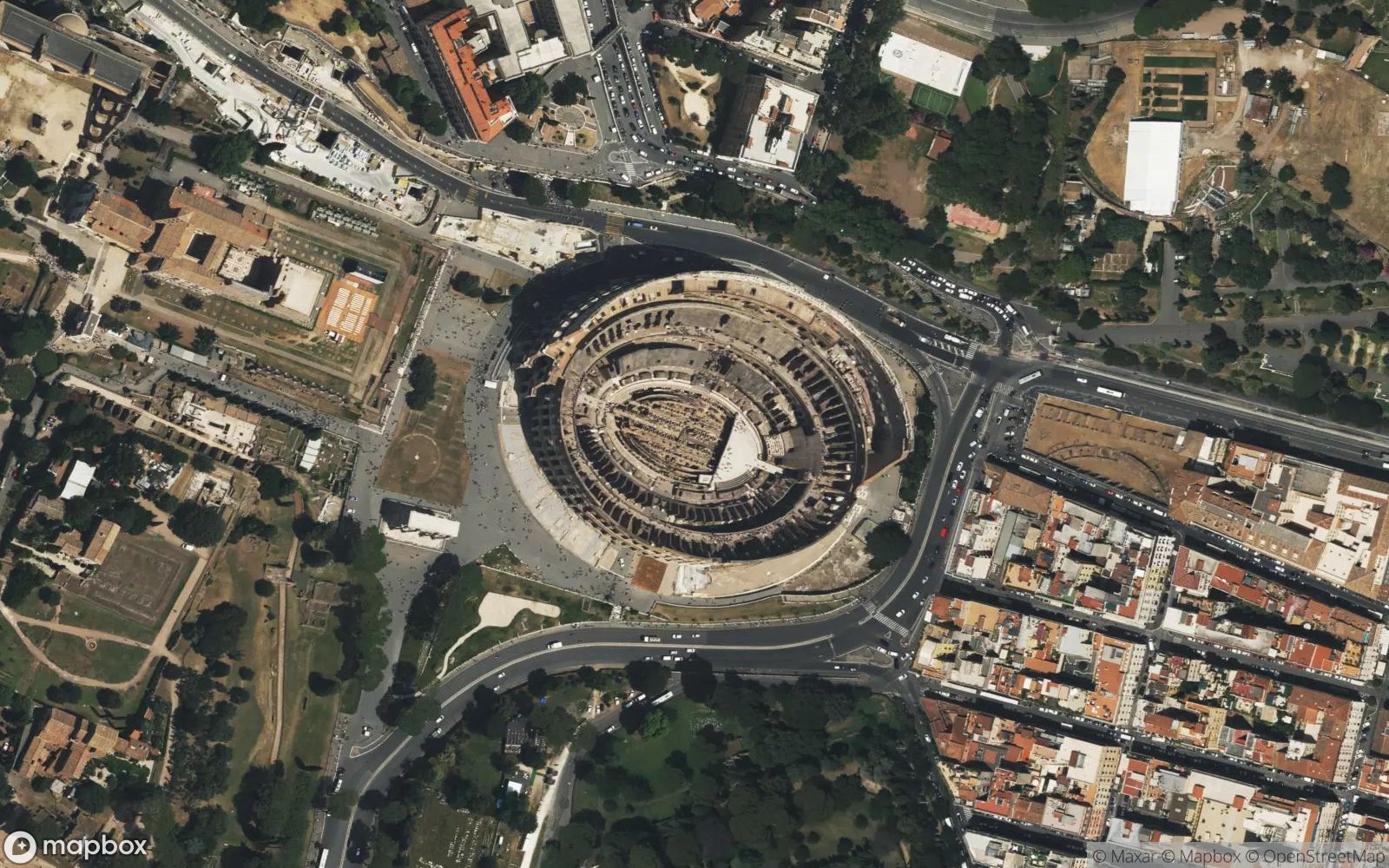
Stone-based showing irregular shapes from erosion. Surrounded by archaeological remains (foundations, walls visible as linear patterns). Often isolated from modern development with protective buffer zones. Examples: Pyramids, Colosseum, Angkor Wat.
Sharp geometric lines, reflective surfaces (glass, metal), perfect symmetry, integrated into existing urban fabric. Examples: Burj Khalifa, Sydney Opera House, London Eye (circular form visible).
5. Religious Architecture Patterns
Different faiths create distinctive architectural forms visible from above.
-
✝️
Christian Cathedrals: Cruciform (cross-shaped) floor plans visible. Large central nave, transepts extending, bell towers at front. Examples: Notre-Dame, St. Peter's Basilica.
-
🕌
Mosques: Central dome with minarets (tall thin towers) at corners. Courtyard with fountain in center. Geometric carpet patterns sometimes visible in satellite imagery. Examples: Blue Mosque, Hagia Sophia.
-
🛕
Temples (Hindu/Buddhist): Tiered pyramid structures or complex mandala patterns. Multiple smaller shrines around central spire. Examples: Borobudur (concentric squares), Shwedagon Pagoda (golden dome).
6. Landmark Preservation Zones
UNESCO World Heritage sites show distinctive protection patterns.
🛡️ Protection Clues: Buffer zones around landmarks appear as green spaces or low-rise areas preventing modern encroachment. The Acropolis has visible excavation grids, Machu Picchu shows limited paths (no modern roads), Egyptian monuments sit in desert with no nearby construction.
🗺️ Explore These Landmarks
See real landmarks from satellite view:
Can you spot them?
🗽 Play Landmarks QuizLearn more about Landmarks • Browse all Landmarks locations 🗿